Knee osteoarthritis
Stiffness, aching and reduced confidence with stairs or longer walks.
KNEE CARE · PUCHONG
Knee pain can affect walking, stairs, exercise, work and everyday movement. Understanding the likely cause matters before deciding on treatment.
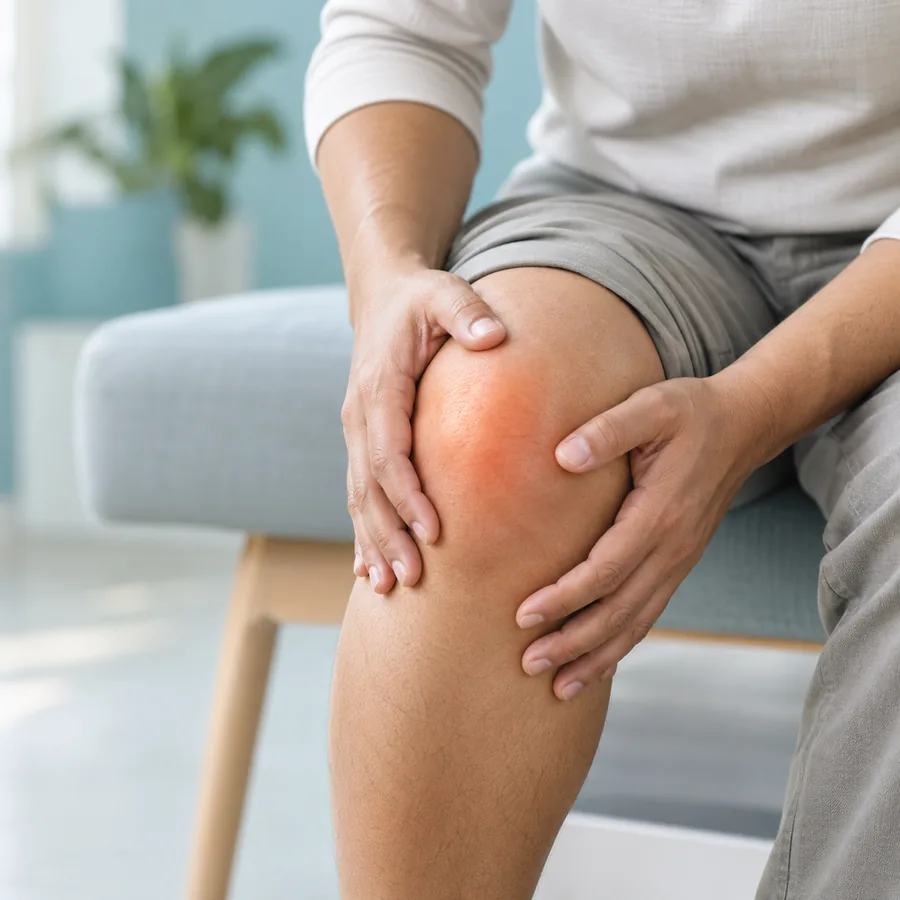
COMMON CONCERNS
Similar symptoms can have different causes. Assessment helps guide the next step.
Stiffness, aching and reduced confidence with stairs or longer walks.
Fluid within or around the knee may follow irritation, injury or another condition.
Pain linked to changes in activity, exercise, work or repeated loading.
Ligament, tendon or other soft-tissue problems may need focused examination and appropriate investigation.
A STEP-BY-STEP PATHWAY
Your symptoms and examination come first.
When it started, what aggravates it, swelling, injury and your daily goals.
Movement, tenderness, stability and relevant function.
Used selectively as part of the clinical assessment.
An individualised next step based on the overall findings.
KNEE ULTRASOUND ASSESSMENT
When clinically appropriate, knee ultrasound may help assess selected soft-tissue structures and identify findings such as fluid within or around the knee.
Ultrasound findings are interpreted together with your symptoms, history, physical examination and overall clinical assessment. Ultrasound cannot show every structure or diagnose every cause of knee pain.
Conservative care, further investigation or referral, aspiration of excess fluid when clinically indicated, or an ultrasound-guided procedure when appropriate.
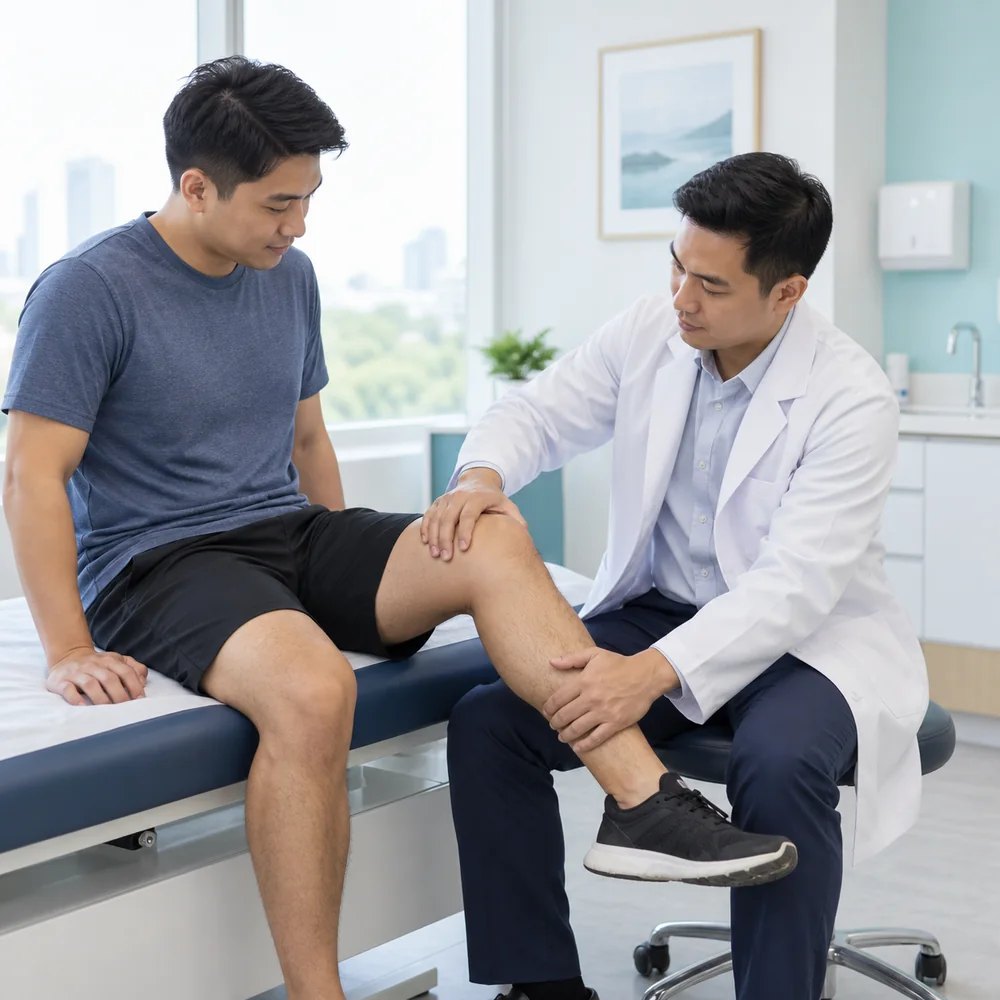
TREATMENT OPTIONS
Injections are not automatically necessary. Recommendations depend on your clinical assessment.
Education, activity modification, medication when appropriate, and rehabilitation or exercise guidance.
Aspiration of excess knee fluid, hyaluronic acid injection, PRP treatment or another ultrasound-guided procedure when clinically appropriate.
Additional imaging or referral when required by the symptoms, examination or progress.
Seek urgent care for severe pain after injury, a changed knee shape, inability to bear weight, or a hot swollen joint with fever. Do not wait for a WhatsApp reply in an emergency.
KNEE PAIN QUESTIONS
These answers are general information. Your assessment determines what is appropriate for you.
Not usually. Start with a clinical assessment. Further imaging may be recommended when it is likely to change the next step.
No. Ultrasound can assess selected soft-tissue structures and fluid, but it cannot show every structure or diagnose every cause. Findings are interpreted with your symptoms and physical examination.
No. Fluid may settle with treatment of the underlying problem. Aspiration is considered only when clinically indicated.
Not necessarily. Injections are selected options for some patients after assessment. Education, activity changes, medication, rehabilitation, investigation or referral may be more appropriate.
WhatsApp or call Poliklinik Alisya Puchong. The clinic will confirm availability and what to bring.
READY FOR THE NEXT STEP?
Start with a conversation with Poliklinik Alisya Puchong.