A diagnosis.
Not the end of movement.
Osteoarthritis affects the whole joint. A tailored exercise plan, education and weight management where relevant can support comfort and function.
Your questions, answeredYOUR MOVEMENT. YOUR EVERYDAY LIFE.
Let’s understand what’s causing it.
And find the right next step.
We assess and manage common musculoskeletal problems, including knee, shoulder, back, heel, joint and muscle pain. Care starts with understanding your symptoms.
WhatsApp Us About Your PainA conversation first. No online payment.
Find your area of pain
START WITH WHAT YOU’RE FEELING
Select an area to explore.
A starting point, not a self-diagnosis.
Photographic examples show where pain may be felt; they do not diagnose a condition.
YOUR AREA OF PAIN · KNEE
Pain on stairs, stiffness after sitting, or swelling can have different causes. Knee osteoarthritis, kneecap-related pain, tendon irritation and injuries are among the possibilities.
We look at movement, tenderness and stability, alongside your symptoms and daily activities.
Ask about your knee painYOUR AREA OF PAIN · SHOULDER
Difficulty reaching overhead, dressing or sleeping on your side can come from the shoulder joint or surrounding tissues. Tendon-related pain and stiffness need different approaches.
Your movement, strength and symptom pattern help guide advice, rehabilitation or further assessment.
Ask about your shoulder painYOUR AREA OF PAIN · BACK & NECK
Pain may follow a change in activity, prolonged positions or an injury. Sometimes symptoms travel into an arm or leg; this deserves a closer look rather than a guess about the cause.
We ask about nerve symptoms and examine relevant movement, strength and sensation where indicated.
Ask about your back or neck painYOUR AREA OF PAIN · HEEL / PLANTAR FASCIITIS
Plantar fasciitis commonly causes pain under the heel or arch, often worse with the first steps after rest. Other conditions can feel similar, so persistent heel pain is worth assessing.
We consider the pain location, footwear, activity demands and foot movement before recommending a plan.
Ask about your heel painYOUR AREA OF PAIN · HIP
Hip problems can be felt in the groin, outer hip or buttock. Joint, muscle and tendon concerns can overlap with symptoms from the back.
An assessment helps identify the likely source and whether exercise advice, investigation or referral would help.
Ask about your hip painYOUR AREA OF PAIN · HAND & WRIST
Pain, stiffness or tingling can make typing, gripping and everyday tasks difficult. Tendon, joint and nerve concerns may need different management.
Tell us about numbness, weakness, swelling and the tasks that trigger symptoms so we can assess the right areas.
Ask about your hand or wrist painYOUR AREA OF PAIN · ANKLE & FOOT
A sprain, recurring instability or pain when walking can involve joints, ligaments or tendons. A painful foot after an injury should not automatically be treated as a simple strain.
We assess the injury history, ability to bear weight and local tenderness to guide the next step.
Ask about your ankle or foot painAnother muscle or joint concern? You don’t need to know the diagnosis before you ask.
Ask about your pain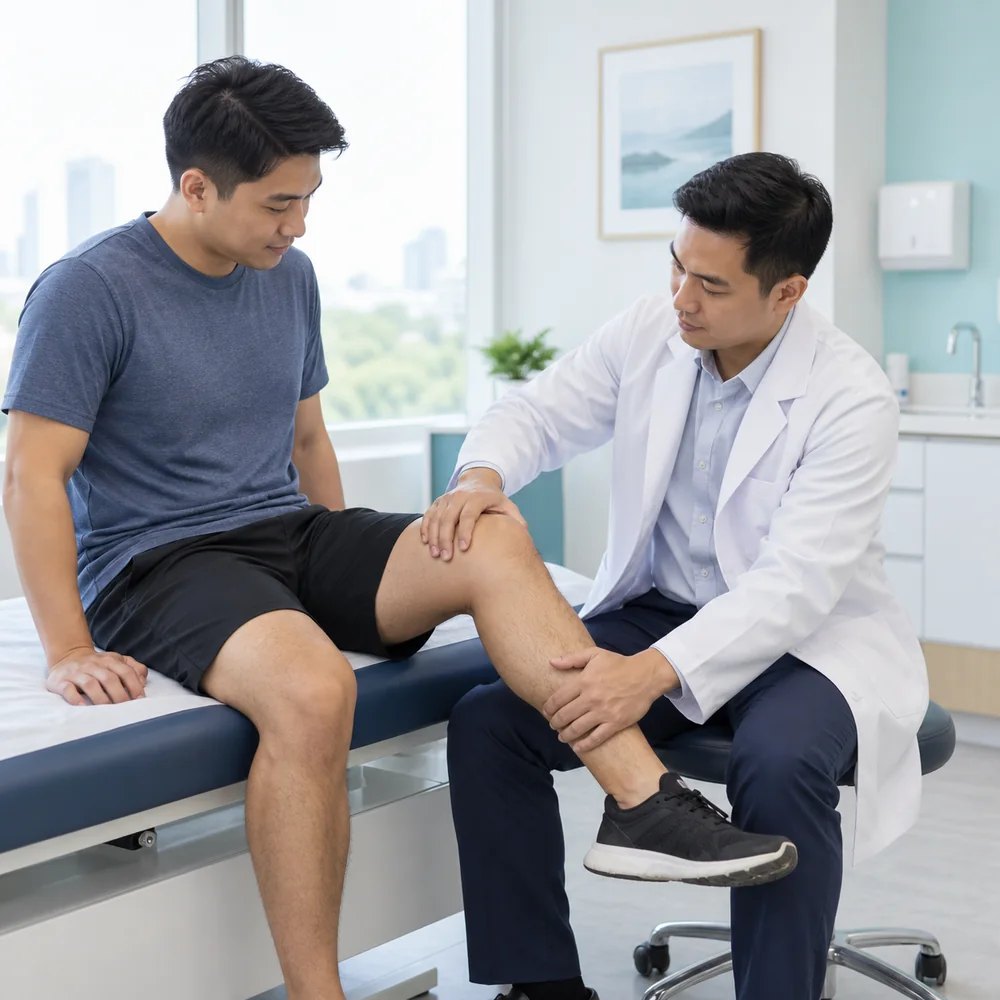
YOUR PAIN & MOVEMENT ASSESSMENT
Pain is personal. Your work, your routines and what you want to get back to doing all matter.
What changed, what triggers the pain, and what concerns you.
A focused examination of the painful area and related structures.
A clear explanation and suitable options, including follow-up or referral.
Bring your medication list and any previous scan reports.
A CLOSER LOOK · KNEE CARE
Stairs. Squatting. Getting up from a chair. Knee pain can interrupt the simplest parts of your day.
For knee pain treatment in Puchong, start with a clinical assessment. Osteoarthritis, tendon problems and injuries can need different care.
Osteoarthritis affects the whole joint. A tailored exercise plan, education and weight management where relevant can support comfort and function.
Your questions, answered
THE EVERYDAY MOVES THAT MATTER
A walk. A working day.
The things you want to do again.
TREATMENT IS A PATHWAY
Depending on the assessment, your management may include:
Education, activity changes and medication where appropriate.
Exercise and rehabilitation guidance suited to your symptoms and ability.
Further tests, reassessment or referral when clinically indicated.
Selected injection treatments may be considered after assessment. PRP, hyaluronic acid and other joint injections have different evidence, risks and limitations. They are not suitable for everyone or guaranteed solutions. NICE advises against hyaluronic acid for osteoarthritis; PRP evidence remains limited in quality. Ask about alternatives, availability and cost before deciding.

OUR APPROACH TO MUSCLE & JOINT PAIN
Poliklinik Alisya Puchong — Joint, Muscle & Bone Care
Our doctors assess and manage common muscle and joint problems, helping you understand your symptoms and the options appropriate for you.
Tell us what hurts, what worries you, and what you’d like to get back to. Your clinical assessment guides a plan, including further investigation or referral when indicated.
Personal, accessible care at Poliklinik Alisya Puchong.
Seek urgent assessment for a hot, swollen joint with fever, severe pain after injury, a changed limb shape, or inability to bear weight. Go to an emergency department for back pain with new bladder or bowel problems, numbness around the groin, or new significant limb weakness. Don’t wait for a WhatsApp reply.
BEFORE YOUR VISIT
Common questions about muscle and joint care.
Ask About Your PainMuscle, joint and bone problems can affect muscles, joints, tendons, ligaments and bones. Pain can be felt in the knee, back, neck, shoulder, hip, hand, wrist, ankle or foot. An assessment helps identify the likely source and suitable next steps.
Yes. Our doctors assess and manage common muscle and joint complaints at Poliklinik Alisya Puchong. Treatment depends on clinical assessment and may include advice, medication when appropriate, exercise guidance, investigation or referral when indicated.
No. Knee pain can also come from tendon irritation, kneecap-related problems, injury, gout and other conditions. Knee osteoarthritis is one possibility, and symptoms or an X-ray alone do not tell the whole story. Treatment depends on your clinical assessment.
Plantar fasciitis commonly causes pain under the heel or arch that is worse when first walking after rest. Other conditions may feel similar. Persistent pain, tingling, injury-related symptoms or foot pain with diabetes should be assessed rather than self-diagnosed.
You can usually start with a consultation. Your history and examination help determine whether imaging or other tests would change management. Bring any previous reports or images you have. Not every muscle or joint problem needs a scan.
Not necessarily. Education, activity modification, medication and exercise guidance may be considered first. Selected injections may be discussed if appropriate, with their evidence, risks, alternatives and costs explained. PRP and hyaluronic acid are not routine solutions for every painful joint, and no injection guarantees relief or cartilage regrowth.
WhatsApp the clinic for current consultation fees and available appointment times. Costs depend on the consultation and any additional investigation or treatment recommended. Ask about fees before agreeing to a procedure. No online payment is required to enquire.
Contact Poliklinik Alisya’s pain and movement appointment channel on WhatsApp at +60 16-925 5806. The clinic will confirm an available time; sending a message does not confirm a booking. Bring your medication list, relevant records and scan reports, and wear clothing that allows the painful area to be examined comfortably.
REAL CARE, RIGHT HERE
Poliklinik Alisya Puchong
GP & Musculoskeletal Care
Pain and movement appointments & clinic enquiries
+60 16-925 5806Confirm opening hours and appointment availability before travelling.
Book a Pain & Movement Assessment
YOUR NEXT STEP STARTS HERE
Knee, shoulder, back or something else.
Start with a conversation with our clinic team.
The clinic will confirm your appointment.
WhatsApp is not an emergency service.