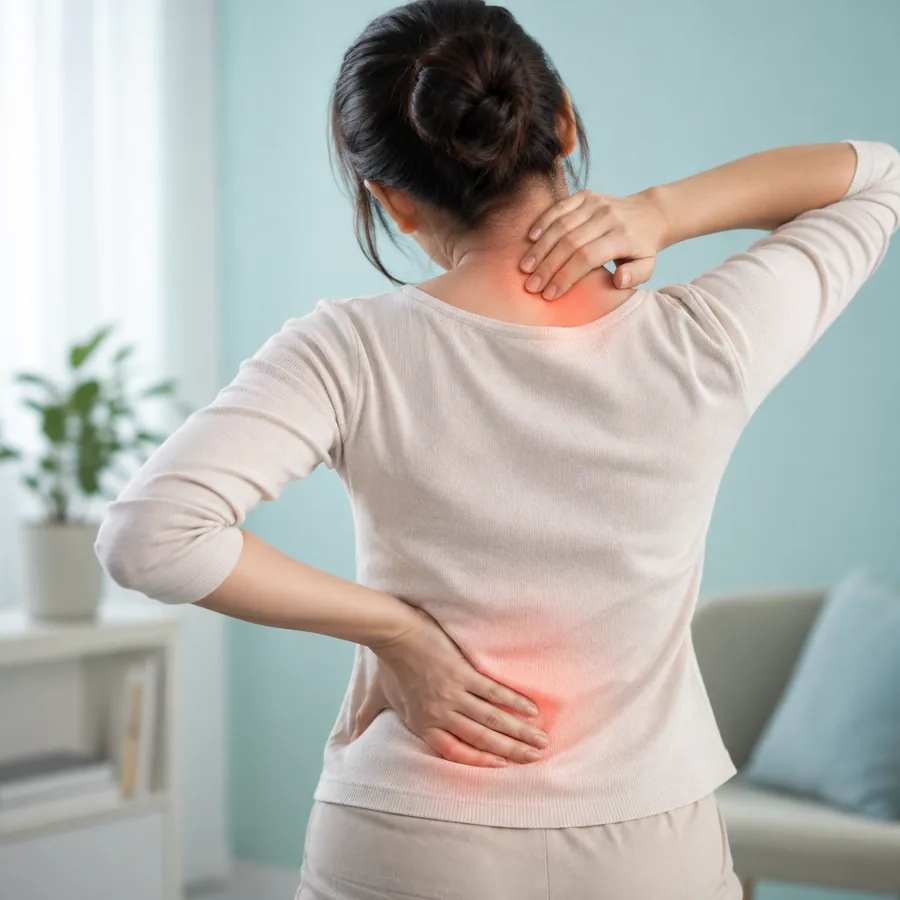
Lower back pain
Pain or stiffness affecting sitting, standing, bending, walking or sleep.
BACK & NECK CARE · PUCHONG
Back and neck pain are common and may affect sitting, standing, walking, sleeping, working, driving, exercise and normal movement. Not all pain comes from a spinal problem, so assessment matters before treatment.
COMMON CONCERNS
Examples include lower back pain, neck stiffness and common muscle or movement-related complaints.
Pain or stiffness affecting sitting, standing, bending, walking or sleep.
Reduced movement or discomfort linked to work, driving or sustained positions.
Muscle strain, physical activity, prolonged sitting and mechanical or postural symptoms.
Pain into an arm or leg, numbness, tingling or weakness may need neurological assessment, investigation or referral.
A CLEAR PATHWAY
Imaging is not automatically required for every patient.
Onset, triggers, daily impact and relevant health history.
Movement, tenderness and relevant function.
Strength, sensation or reflexes when symptoms make this relevant.
Imaging or referral when the findings suggest it may help.
A clear management and follow-up pathway.
TREATMENT & MANAGEMENT
Management varies with the likely cause and does not guarantee pain relief or recovery.
Activity modification, movement advice and medication or analgesia when appropriate.
Exercise and rehabilitation guidance, with physiotherapy or referral when appropriate.
Further investigation or specialist referral when clinically required. Injections are not routine management.
Seek urgent medical assessment for new or significant limb weakness, loss of bladder or bowel control, numbness around the groin or saddle area, severe pain after significant trauma, rapidly worsening neurological symptoms, or back or neck pain with significant systemic illness symptoms.
WHEN TO GET ASSESSED
Arrange an assessment for persistent, recurrent or worsening pain.
Stiffness or pain affects work, driving, walking or normal activities.
Pain regularly interrupts rest or makes comfortable positions difficult.
Travelling pain, numbness or tingling deserves closer assessment.
Pain or function is worsening rather than gradually improving.
BACK & NECK QUESTIONS
General information cannot replace an individual assessment.
Lower back pain can follow muscle strain, changes in activity, prolonged positions or other joint and movement problems. Symptoms and examination help identify the likely cause.
Neck stiffness can be linked to muscle tension, sustained positions, activity or irritation around the neck. Other causes are possible, especially when symptoms travel into an arm.
Not everyone needs imaging. It is considered when the history, examination or progress suggests it may change management or when concerning symptoms are present.
Pain travelling into a leg may involve irritation of a nerve or another source. Numbness, tingling or weakness should be described during assessment and may require further investigation or referral.
Yes. Depending on the assessment, management may include activity changes, medication when appropriate, movement advice, exercise, rehabilitation or physiotherapy. Injections are not routine treatment.
Arrange an assessment for persistent, recurrent or worsening symptoms, reduced movement, sleep disturbance, or pain affecting normal activities. Seek urgent care for new significant weakness, bladder or bowel changes, saddle numbness or severe pain after major trauma.
YOUR NEXT STEP
Start with a conversation with Poliklinik Alisya Puchong.