Settle aggravating load
Activity modification, footwear advice and analgesics or other medication when appropriate.
HEEL PAIN CARE · PUCHONG
Pain with the first steps in the morning, after prolonged standing, or after walking and exercise may come from the plantar fascia—but heel pain can have other causes too.
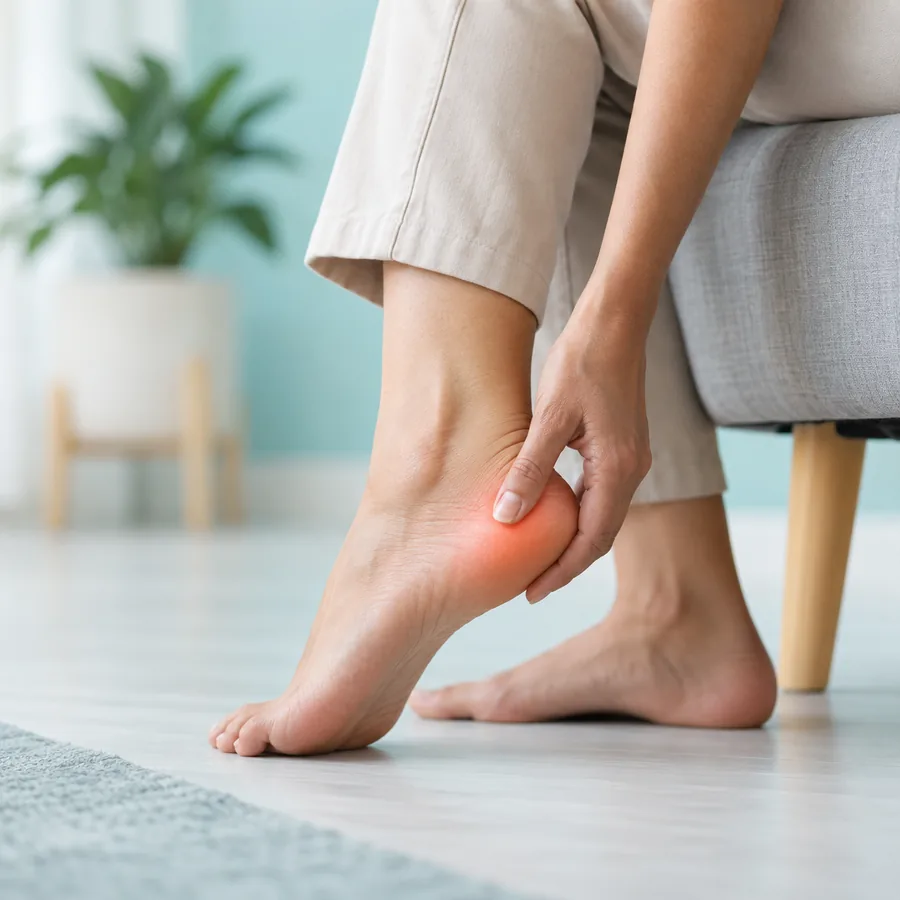
UNDERSTANDING HEEL PAIN
The plantar fascia is a strong band of tissue running along the sole of the foot. When it becomes irritated, pain is often felt under or around the heel, especially with the first steps after rest.
Tenderness around the heel or plantar fascia, discomfort after prolonged standing, and pain after walking or exercise are common experiences. They do not confirm the diagnosis by themselves.
Problems involving the heel pad, tendons, joints, nerves, injury or other medical conditions can sometimes feel similar. Proper assessment matters before treatment.
A CLEAR PATHWAY
We start with your symptoms and the activities that matter to you.
Where it hurts, morning symptoms, activity changes, footwear and previous injury.
Heel tenderness, foot and ankle movement, walking and relevant strength or flexibility.
Imaging or another test only when the clinical findings suggest it may help.
Advice and treatment matched to the likely cause, severity and your daily needs.
TREATMENT OPTIONS
Treatment depends on the assessment. No single option is suitable for everyone.
Activity modification, footwear advice and analgesics or other medication when appropriate.
Plantar fascia and calf stretching, home rehabilitation guidance and gradual return to activity.
Further investigation or referral when symptoms, examination findings or progress indicate it is required.
PLANTAR FASCIITIS CARE
For suitable patients, care may bring together the consultation, simple equipment and clear home guidance.
This pathway is not suitable for every patient. Management depends on the clinical assessment.
WhatsApp Us About Your Heel PainWHEN TO GET ASSESSED
Consider an assessment if pain persists, recurs or interferes with normal activities.
Pain that is not settling or keeps returning despite sensible self-care.
Heel pain changes your walking, work, exercise or ability to stand.
The pain followed an injury, feels unusual, or you are unsure whether it is plantar fasciitis.
Seek prompt care after significant injury, if you cannot bear weight, or for a hot swollen foot with fever.
HEEL PAIN QUESTIONS
General information cannot replace an individual assessment.
Plantar fasciitis is linked to irritation of the strong band of tissue under the foot. Changes in activity, repeated loading, footwear, calf flexibility and other factors may contribute. Not every case of heel pain is plantar fasciitis.
The plantar fascia can feel stiff after rest. The first steps load the tissue again, which can make morning pain more noticeable. Other causes can create similar symptoms, so persistent pain deserves assessment.
The time course varies. Symptoms may improve gradually with appropriate load changes, stretching and rehabilitation, but some cases persist or recur. An assessment can help identify factors that may be slowing progress.
Many people do not need imaging initially. Further investigation may be considered when the history or examination suggests another cause, symptoms persist, or results would change management.
Reducing activities that clearly aggravate the heel, wearing supportive footwear and following suitable calf and plantar fascia stretches may help. Advice should match your symptoms and ability.
Arrange an assessment if heel pain persists, keeps returning, affects walking or normal activities, or if you are unsure of the cause. Seek urgent care after significant injury, for inability to bear weight, or for a hot swollen foot with fever.
YOUR NEXT STEP
Start with a conversation with Poliklinik Alisya Puchong.