Hip joint-related pain
Groin or hip pain, reduced movement and age-related joint problems.
HIP CARE · PUCHONG
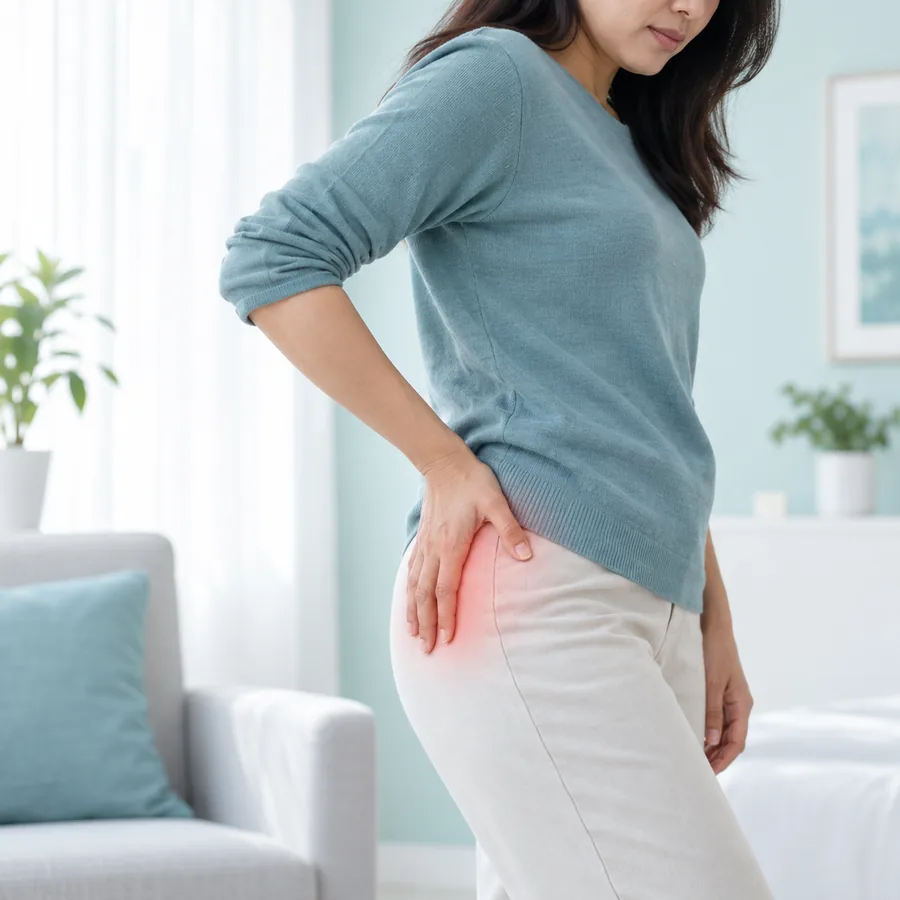
Hip pain can affect walking, stairs, getting up from a chair, sleeping, exercise, work and normal movement. Pain around the hip may come from different structures—and sometimes from the lower back—so assessment comes first.
COMMON CONCERNS
Pain around the hip does not always originate from the hip joint.
Groin or hip pain, reduced movement and age-related joint problems.
Pain after activity or involving muscles and tendons around the hip.
Discomfort when walking, climbing stairs, lying on the side or getting up.
Symptoms may sometimes come from another area, including the lower back.
A CLEAR PATHWAY
X-rays and scans are not automatically required.
Onset, location, triggers and medical history.
Tenderness and relevant clinical signs.
Walking, hip movement and daily tasks.
Imaging or referral when it may change care.
Suitable management and follow-up.
TREATMENT & MANAGEMENT
Procedures are not suitable for everyone and no treatment guarantees recovery.
Activity modification, movement advice and medication when appropriate.
Exercise and rehabilitation guidance, with physiotherapy when appropriate.
Further imaging, selected procedures or specialist referral when clinically indicated.
WHEN TO GET ASSESSED
Persistent, recurrent or worsening symptoms deserve a closer look.
Pain affects walking, stairs or getting up from a chair.
Stiffness interferes with work, exercise or daily activities.
Symptoms repeatedly disturb sleep or comfortable positions.
Pain or function is getting worse rather than improving.
Seek urgent assessment for severe pain after significant injury, inability to bear weight following injury, significant swelling or deformity, rapidly worsening symptoms, or hip pain with significant systemic illness symptoms.
HIP PAIN QUESTIONS
General information cannot replace assessment.
Back & neck pain information ↗Pain around the hip can involve the joint, muscles, tendons or nearby structures. It may also be referred from another area, including the lower back.
Walking loads the hip and surrounding muscles and tendons. Pain may relate to the joint, outer-hip tissues, activity changes or another source, so assessment helps clarify the pattern.
Yes. Symptoms from the lower back can sometimes be felt around the buttock or hip. Examination helps distinguish referred pain from a local hip problem.
Not automatically. Imaging is considered when the history, examination or progress suggests it may change management.
Yes. Activity changes, medication when appropriate, movement advice, exercise, rehabilitation or physiotherapy may be suitable. Procedures are selected options only.
Arrange an assessment for persistent, recurrent or worsening pain, reduced movement, sleep disturbance or difficulty walking. Seek urgent care after significant injury, if you cannot bear weight, or for marked swelling or deformity.
YOUR NEXT STEP
VISIT OR CONTACT THE CLINIC
Open 24 Hours · 7 Days a Week
General Clinic Line+60 11-6229 1644
Muscle & Joint / Website Enquiries+60 16-925 5806
Get Directions (opens in a new tab)